2023.12.13 · AI-translated
About Walk in Progress #0
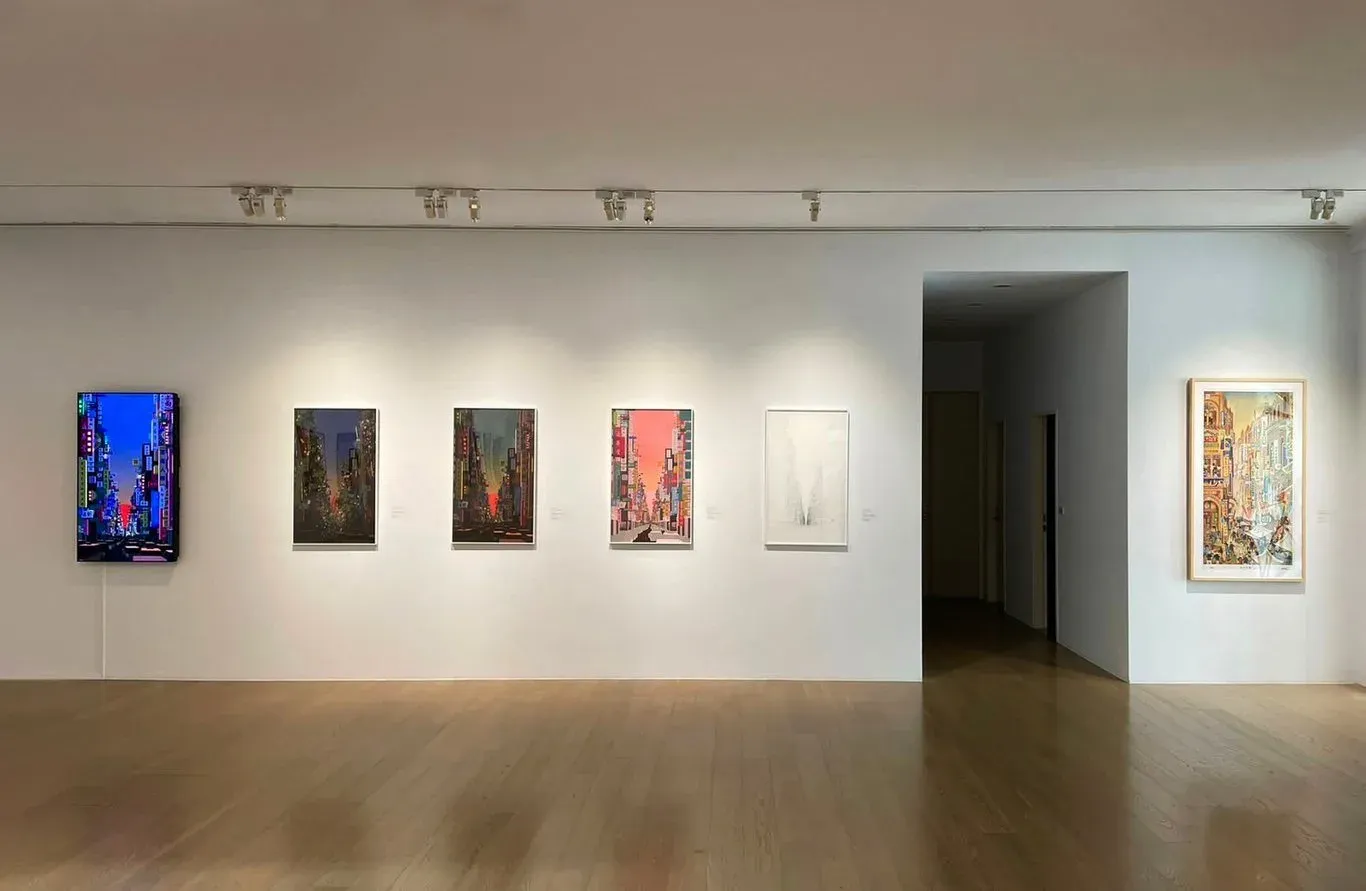
The group exhibition I joined at the end of 2023, “Kuo Hsueh-Hu and Generative Artists: A Century-Spanning Dialogue on Landscape,” has opened smoothly. The show isn’t over yet, but I think it’s safe to write down the story of this work now.
Choosing a subject
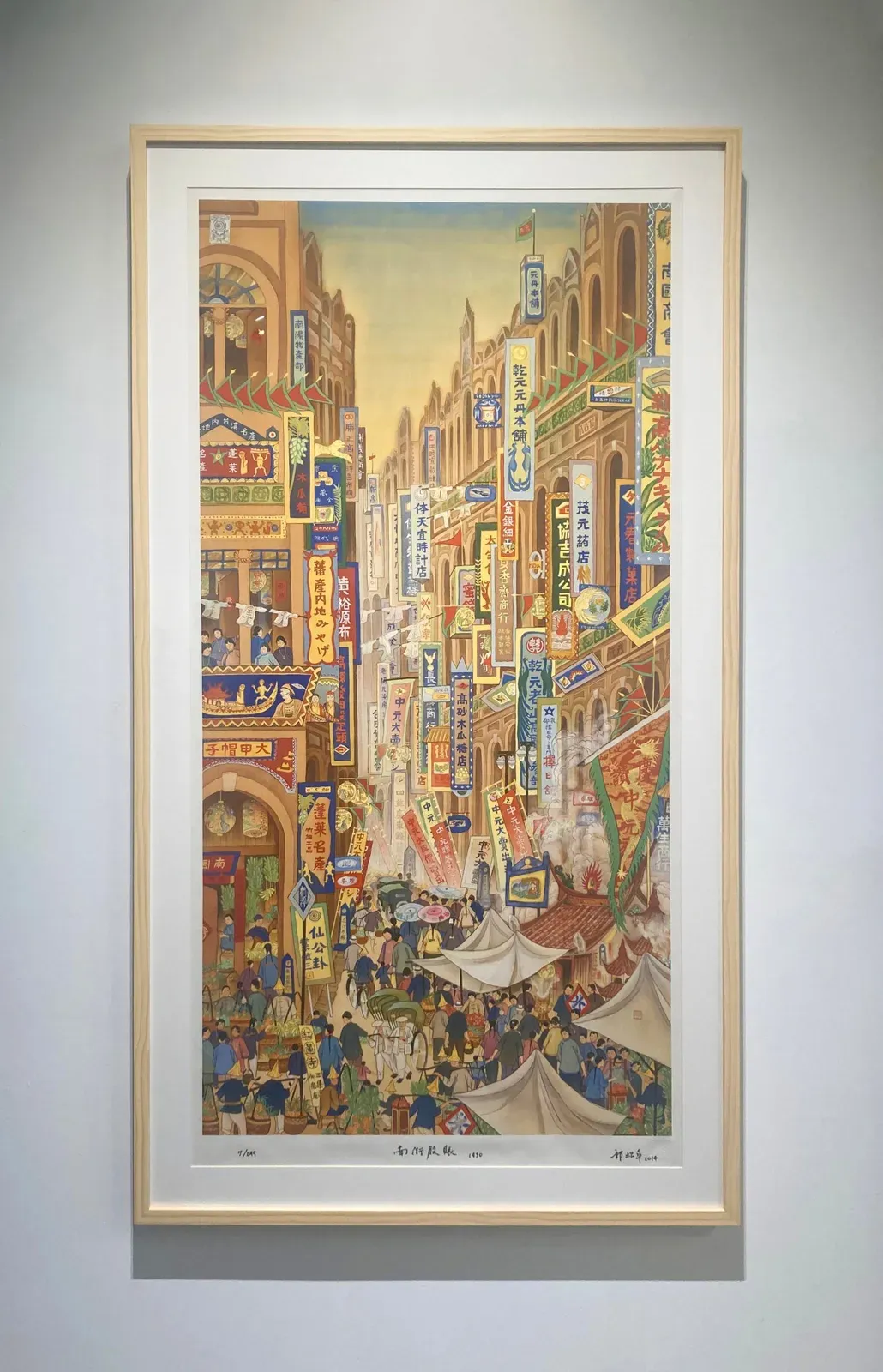
The theme of the exhibition was a dialogue with Kuo Hsueh-Hu’s paintings, and each invited artist could pick one or more of his works as their subject. My previous work happened to be Taiwan Architecture Memory, so when I was looking through his paintings and saw Festival on South Street, which depicts the street scene of his time, I decided on it right away.
I got really excited thinking, “If Kuo Hsueh-Hu were a generative artist today, how would he make Festival on South Street?”
I decided quickly, but for a long time after saying yes I had no idea where to start. With less than two months left, I even considered drawing it in a way I was more familiar with (like the simple layer stacking I used for the octopuses and corals), or picking another painting that would be easier to translate.
Early stage
Eventually I came up with a method that suited this piece. It wasn’t simple layer stacking, and it didn’t run in a real 3D space like Turtle Vision either. Instead, I converted 3D coordinates into 2D in JavaScript, then used those 2D points to draw the projected polygons directly. The way I calculate perspective is simple too: I imagined the one-point perspective you often use when sketching in real life, and worked out the formula for the coordinates from there.
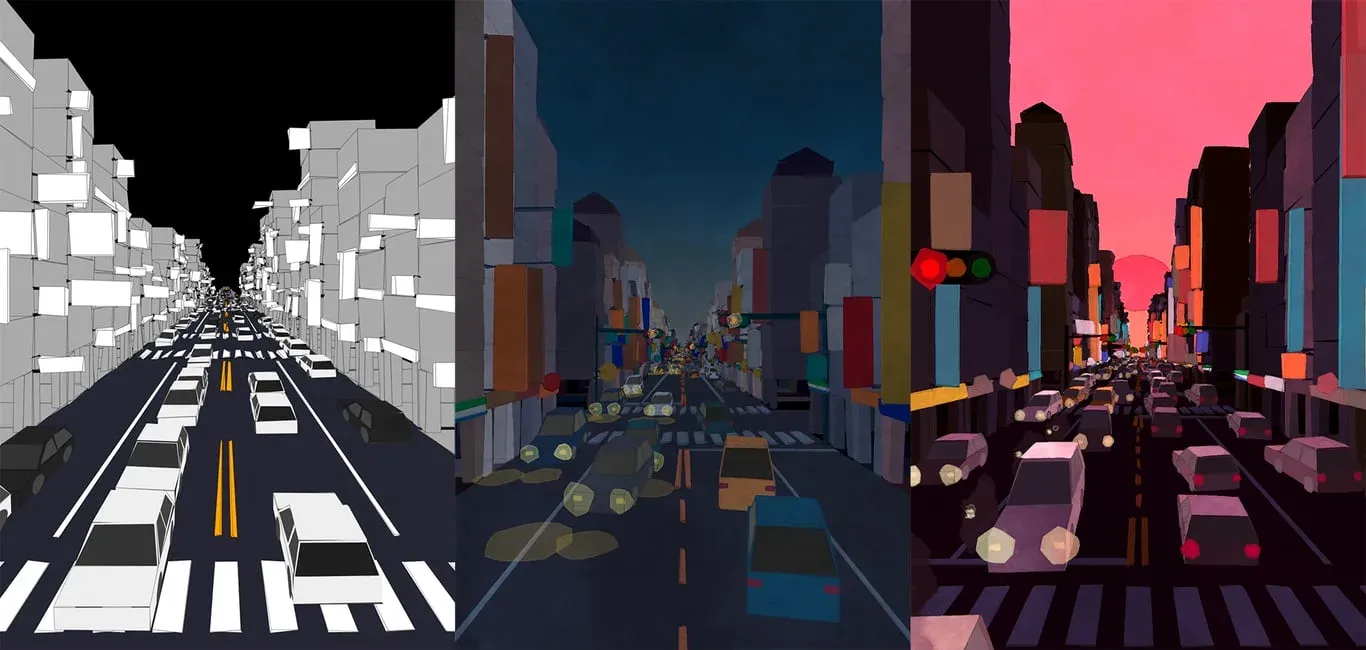
Once I had the method, I quickly sketched out a rough prototype with random colors, but at this point there was no generative process yet. I’ve always seen the generative process as one of the most important elements of my work, so I started thinking about how this piece should be generated. (So far, this is the only time I’ve started making a work without figuring out the generative process first.)
Time (short-term)
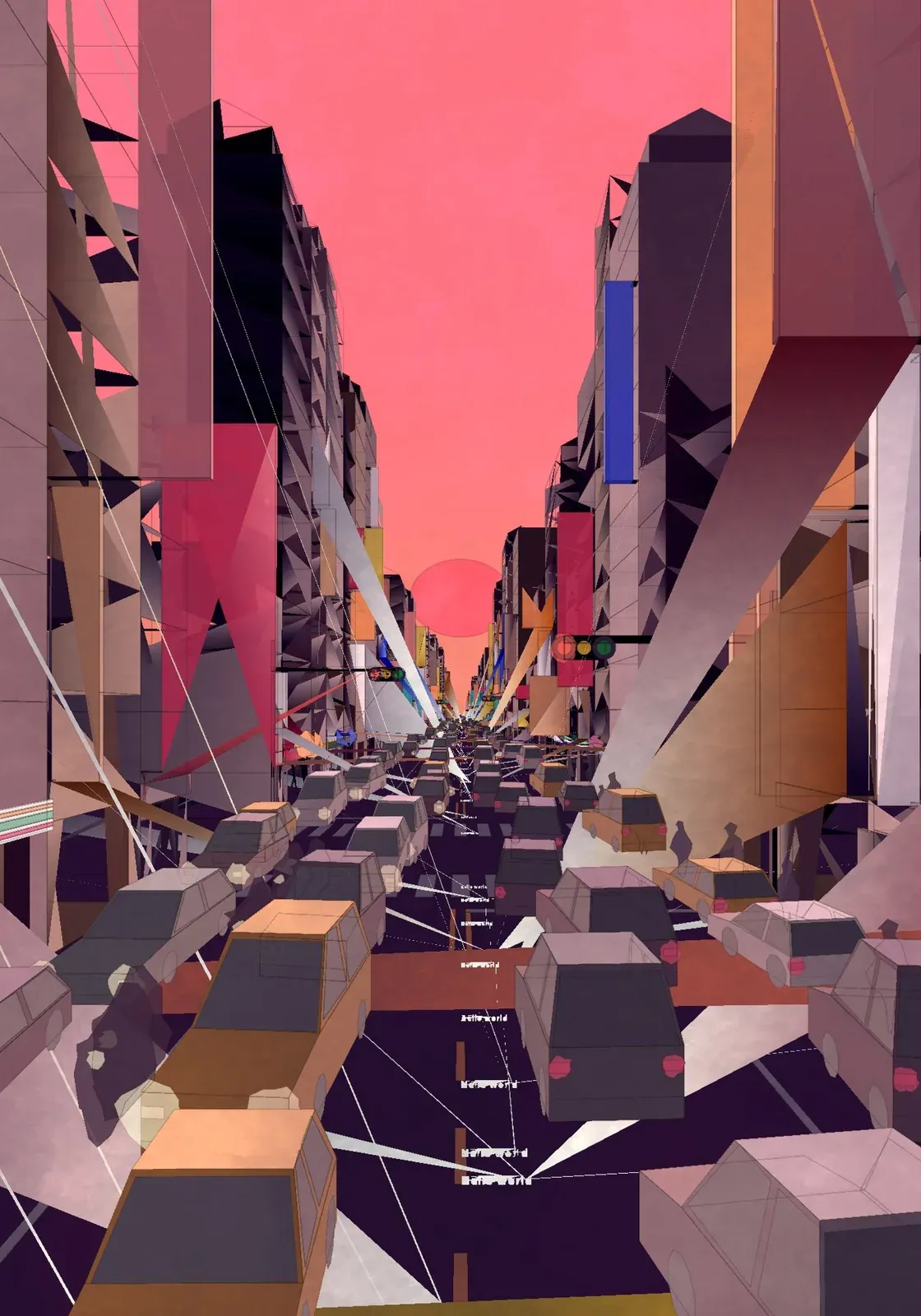
When I was learning about Kuo Hsueh-Hu, the first thing that really struck me was his medium: gum-color painting (jiaocai), which back then was still called “Eastern painting.” It’s a lot of work. After finishing the line drawing, you don’t paint it directly. You first make a color study with something like ink (probably to settle on the colors), and only then finish it in gum colors on paper or silk. On top of that, you have to grind the pigments into powder yourself and mix them with boiled glue before you can use them. I admire the mental strength it takes to work in a medium like this for years, so I thought I should bring the “time” of making a gum-color painting into the generative process. That’s where the idea of generating it in order, line drawing → color study → finished painting, came from.
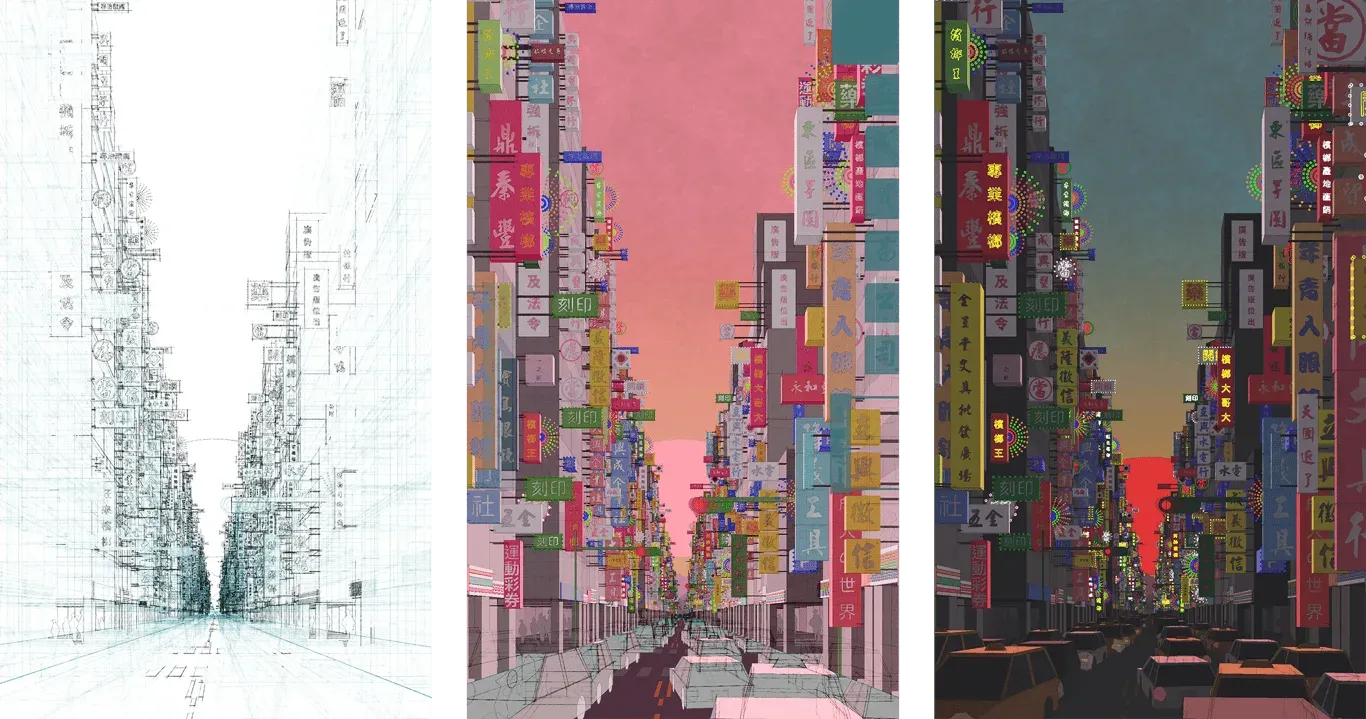
To turn the original p5 drawing into a three-stage generative process, the performance was hopeless without switching to WebGL. So in the end I only used p5 to calculate the positions and colors of the polygons and passed them to regl, and left the color post-processing to shaders, which opened up a lot of variations.
The biggest problem at this stage was displaying text. In p5 you can render text directly with text, but to get it into WebGL you first need to read the text’s paths, get the points along those paths, and finally triangulate them (cut a polygon into many small triangles) to get the correct result.
Time (long-term)
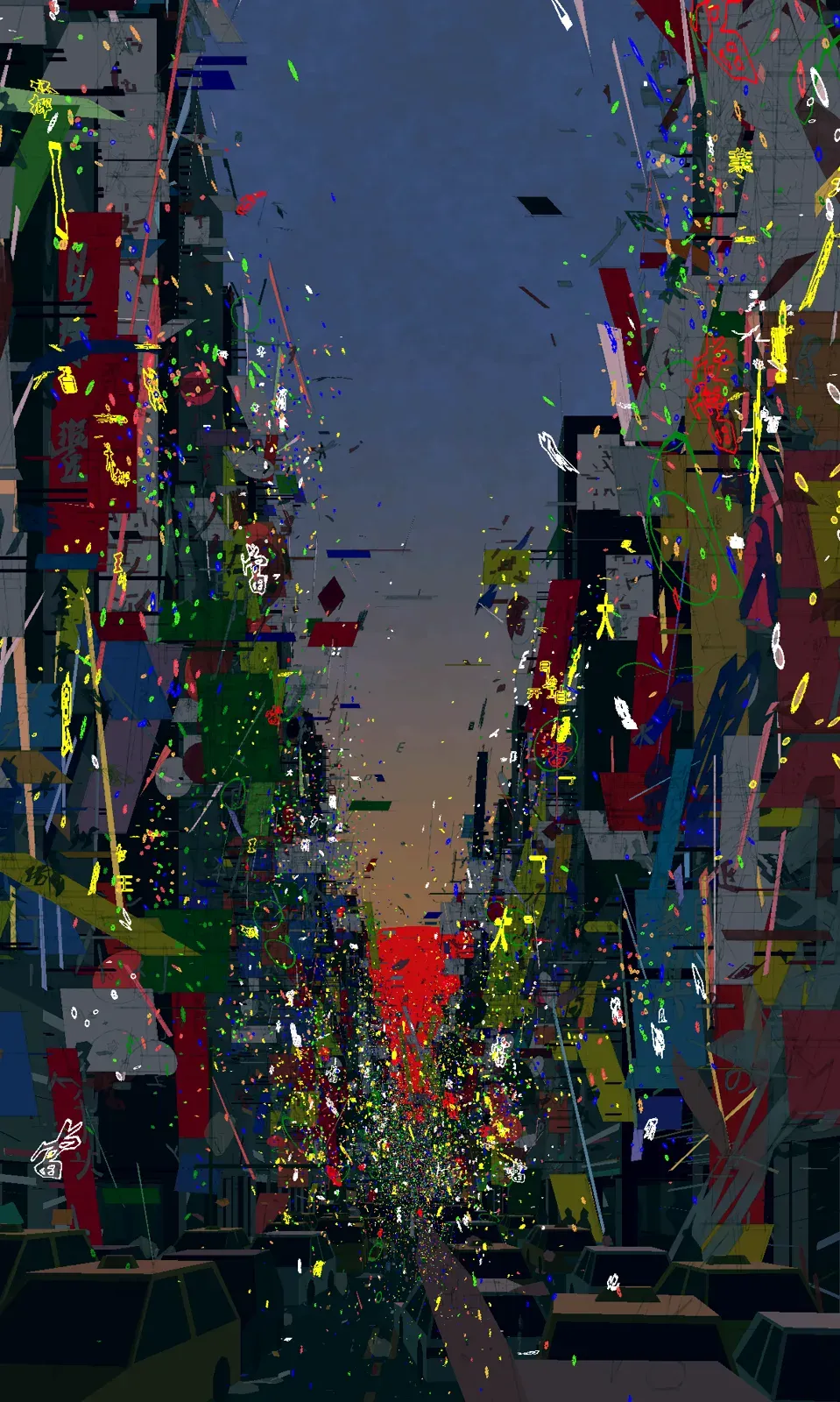
By this stage the work had actually reached its original goal, but the miscalculated results gave me the idea for a collapsing version, so I started thinking about time again.
“When is a work actually finished?” has always been a subjective question for the maker. But some things change over the years. A new leather item, for example, might take a few years of use before one day you suddenly notice it’s “finished.” Paint, on the other hand, deteriorates over time; the longer it sits, the more it fades, or even flakes off. Could I make a work that brings in this longer sense of time? So I looked at Festival on South Street again, and was struck by the fact that not a single one of the shop signs he recorded is still there today.
Then I started thinking about the lifespan of artworks. A regular artwork with regular restoration can probably last a hundred years or so? NFTs (in web form) supposedly exist forever once they’re on chain (let’s set aside whether they’re stored on IPFS). But even if the NFT never dies, browsers will wither away. I don’t know if blockchain technology will still be around in a hundred years, but will there still be a browser that can open my work? If people in the future are kind enough, maybe someone will keep an antique 2023 Mac inside their virtual consciousness just to open NFTs from our time for research?
The fourth stage, “collapse,” now had a reason to exist. I wanted it to be an analogy for how traditional materials deteriorate, but visually it isn’t fading. It’s things drifting out of place, because the most common thing that happens to digital works (like a web page from 20 years ago) is a broken layout. What the image conveys is the signs coming apart over time, echoing the fact that none of the signs in Festival on South Street exist anymore.
Naming
This exploration of time is also where the title comes from. In the generative art community, people often share WIPs (Work in Progress) on Twitter, which are screenshots of a work halfway through development. If you think of urban development (civilization) as a kind of work, then Festival on South Street and my piece can be seen as two WIPs nearly a hundred years apart. So I named it Walk in Progress. I plan to keep developing this work, so I added the number #0.
NFT
Finally, I brought time into the NFT version as well. For the first week after the work’s release, the image stops generating at the line drawing. After a week, it generates up to the color study, and only after a month does it produce the finished painting. Then, 93 years later (the time between Festival on South Street and now), the collapse happens. This questions the permanence of NFTs, and it’s also my hope that people will still be in dialogue with our works in the future. (Though they’ll probably only be talking with Kuo. If anyone still remembers my work in five years, I’ll be happy.)
p.s. The NFT version is heavy on CPU and GPU, so it’ll lag for a moment when you first open it. On phones, you’ll probably have to wait another five years.
Later I realized that an artwork’s lifespan actually has nothing to do with deterioration, damage, or loss. A work that no one talks about or remembers is as good as dead. Every now and then, one comes back to life many years later.
Spin-off work: WIP 3D
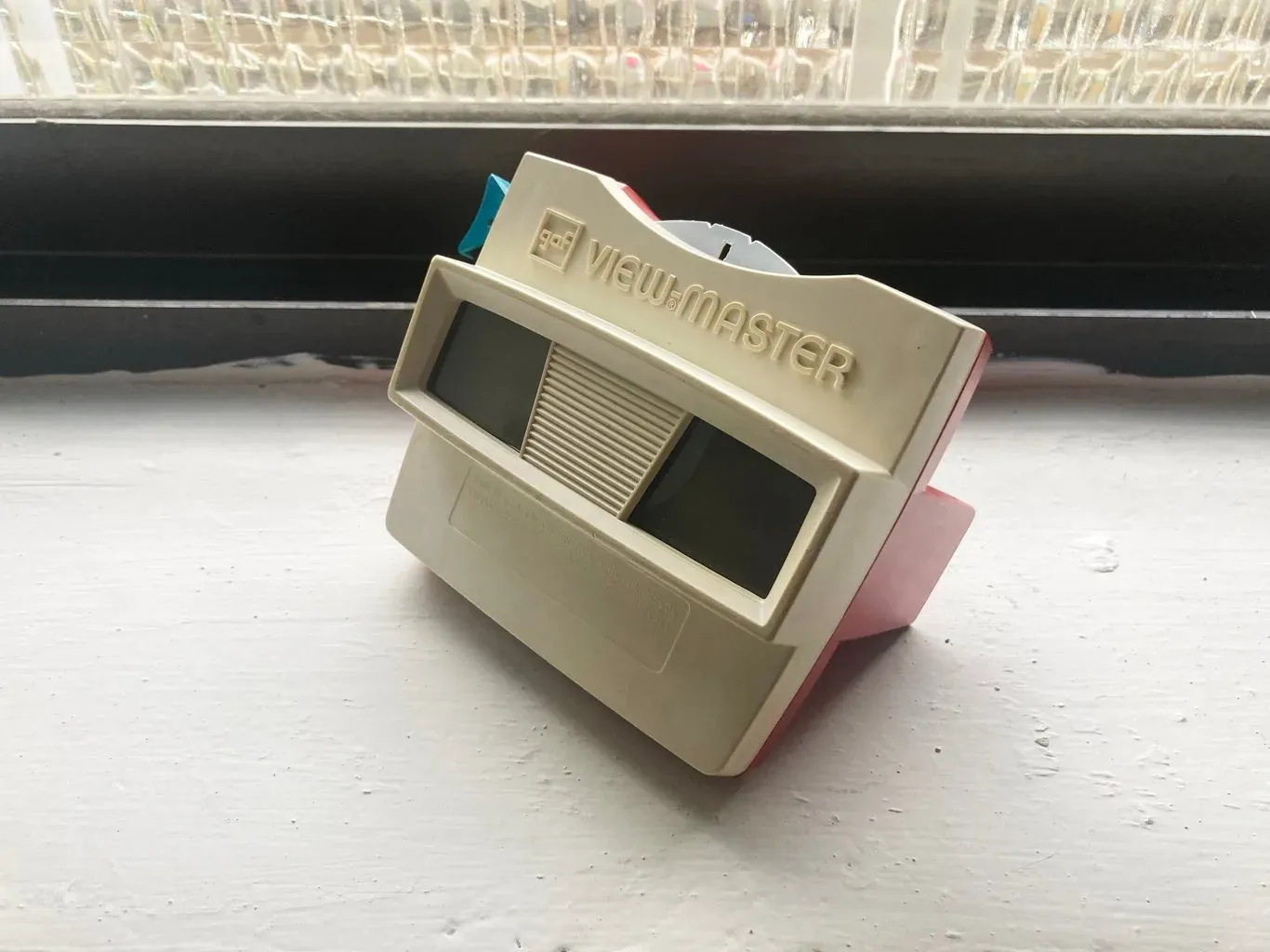
Two days before the exhibition opened was my birthday, and my wife gave me an amazing birthday present early. I was in the middle of being super busy, and I’d hoped to finish it before the opening, but the film came a few days late. Luckily it worked out in the end, and it looks great and fits this work really well. My wife, who came up with this whole project, is a genius.
The present is called a View-Master, which is probably the oldest VR device there is. You insert a reel in the middle, and each reel holds 7 pairs of slides (14 in total for the left and right eyes), which look 3D when you view them. The reels you find out there are mostly old cartoons or photos of local scenery.
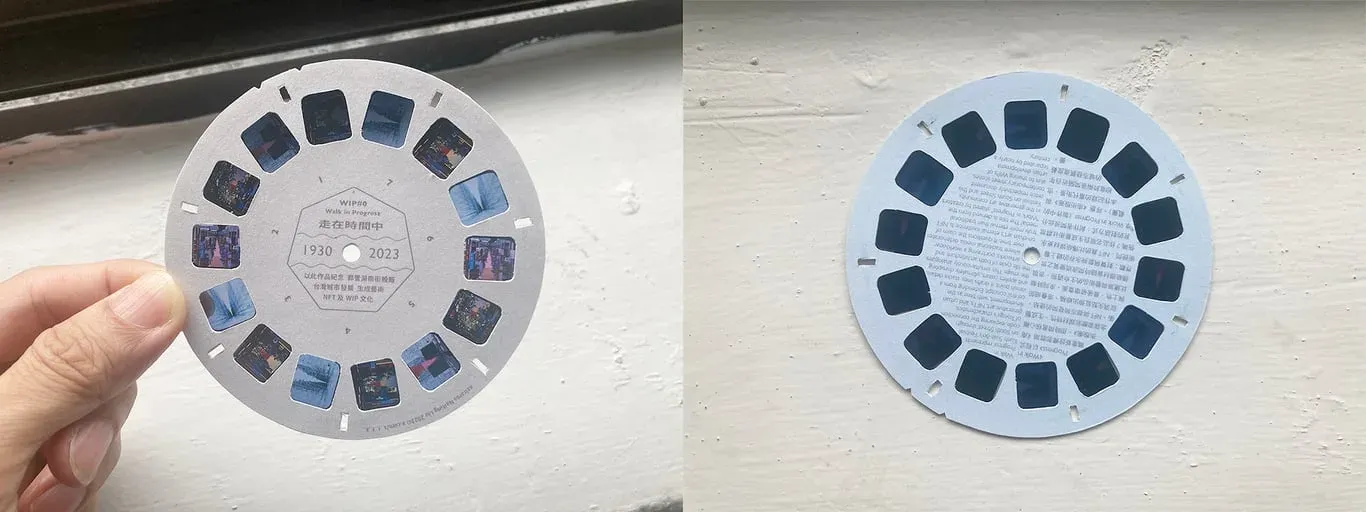
The slides use color positive film. At first I naively thought printing on transparency film would be enough, but when I put it in, all I could see were big, coarse halftone dots. I went to several old photo studios, and they all said no one in Taiwan develops this anymore. In the end I got it done at a studio that develops motion picture film. Many thanks to “Whatevergraphy film lab” for reshooting and developing the film for me.
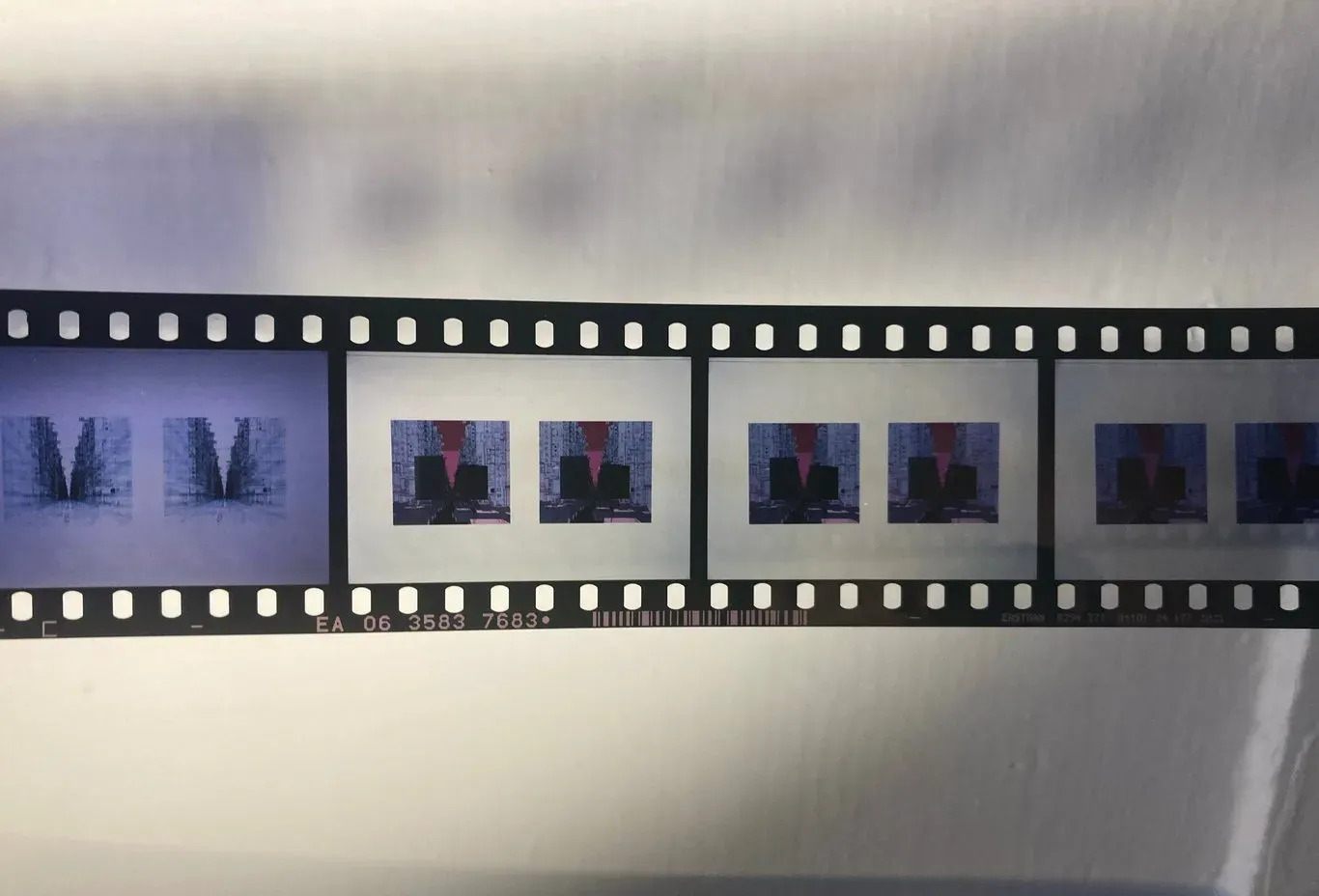
If you’d like to try this work, you can come to “Xi (Connect): Volume DAO - fxhash Art Salon & Community Day,” which we’re holding on the 15th this month, or on the 23rd, when we’ll have a talk with Kuo Hsueh-Hu’s son, Kuo Sung-Nien, at Liang Gallery. I’ll bring it with me to both.
Afterword
At one point while drawing this, I got really frustrated, because that chaotic street scene looks so much like Taiwan’s streets today (the colors are very different from my early stage, because most Taiwanese signs are red, white, and blue), and it reminded me that people have started debating again why Taiwanese streetscapes are so ugly. I think they’re ugly too, but for me, that messy, disorderly vitality of Taiwan is great subject matter and nourishment for generative art.
This was my first time showing at a gallery, and also my first time printing a generative work as large as 60 x 100 cm. I think everyone who writes generative art should try printing that big at least once. It’ll teach you a lot for your future work.
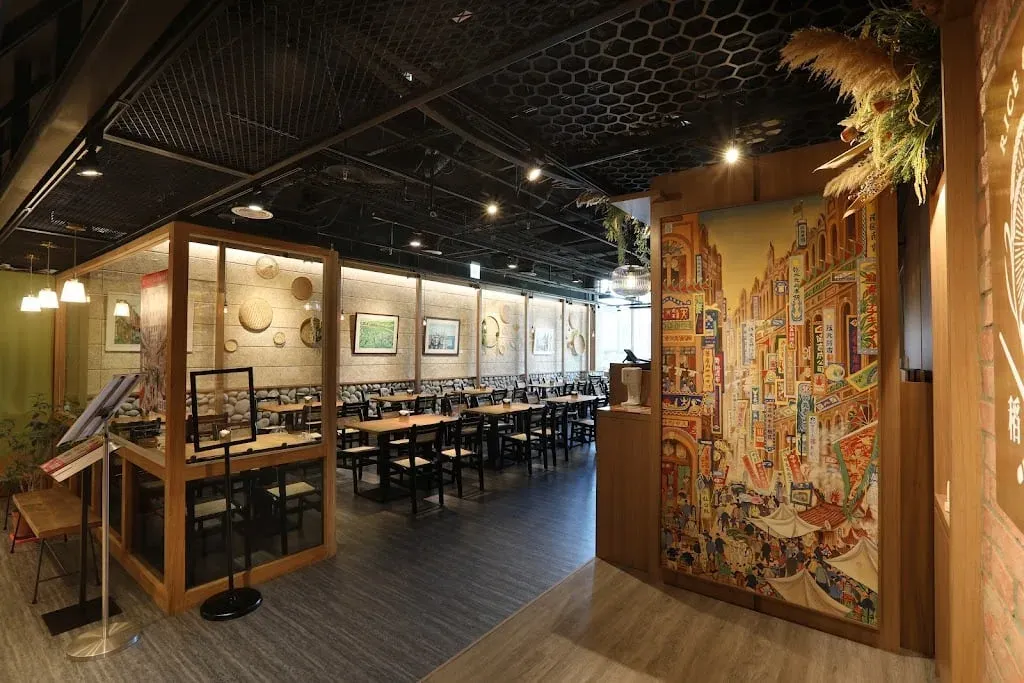
Whenever I hit all kinds of technical difficulties while making this, I wanted to run away or slack off and go do something else for a while, and then, mysteriously, I’d get a message from Kuo Hsueh-Hu. For example, when I finally found time to go out to dinner with friends, I ran right into this with no way to dodge it:
Or when my wife borrowed a book by Nishikawa Mitsuru from the library and I went on amazon.jp to look for his other books, there it was again:
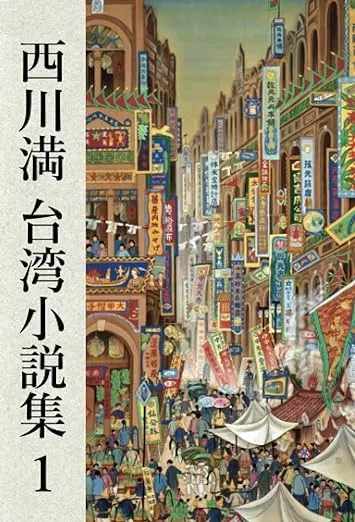
To still be remembered after so long, it really is a great work. I’m honored to have shown on the same wall as an artist like this, and I’d like to thank akaSwap, Liang Gallery, and everyone involved for making this exhibition happen.
The exhibition runs until mid-January. If you want to see the drawing process or the details of the large prints, please come see it in person. There are also many other great works by other artists.
郭雪湖與數位生成藝術家—跨越百年 風景對話
Kuo Hsueh-Hu and Generative Artists: Landscape Across Centuries
郭雪湖 KUO Hsueh Hu
王新仁 Aluan Wang
林經堯 Lin,Jinyao
黃 新 Newyellow
陳依純 Chen I-chun
陳 普 Chen Pu
劉乃廷 Liu Naiting
Dates: 2023.12.09 (Sat) - 2024.01.14 (Sun)
Venue: Liang Gallery (尊彩藝術中心)